Timeline Stories

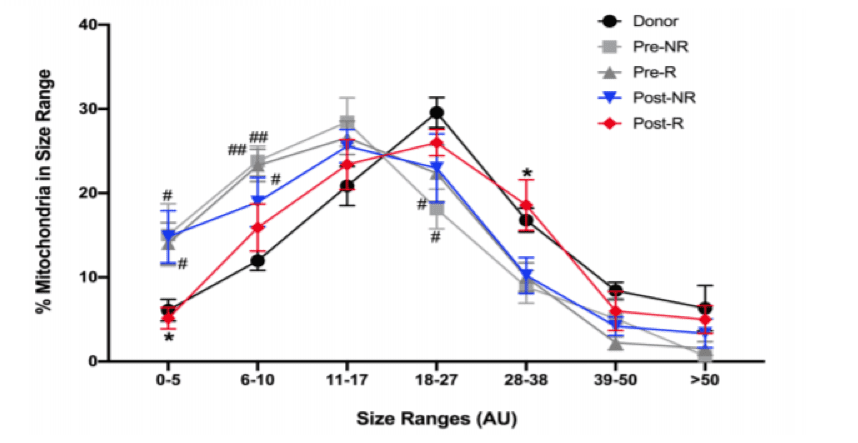
Line graph showing % mitochondria in different size ranges (AU) for five groups: Donor, Pre-NR, Pre-R, Post-NR, and Post-R. Donor peaks at 17-28 AU; all groups show significant differences at various ranges. Error bars are present.

2020 The Role of Non-Glycolytic Glucose Metabolism in Myocardial Recovery

Drs. Chaudhuri, Drakos, and Selzman demonstrate heart failure patients who successfully respond to mechanical unloading have major alterations in cardiac metabolism that may facilitate their recovery. Badolia R, Ramadurai DKA, Abel ED, Ferrin P, Taleb I, Shankar TS, Thodou Krokidi A, Navankasattusas S, McKellar SH, Yin M, Kfoury AG, Wever-Pinzon O, Fang JC, Selzman CH, … Read more
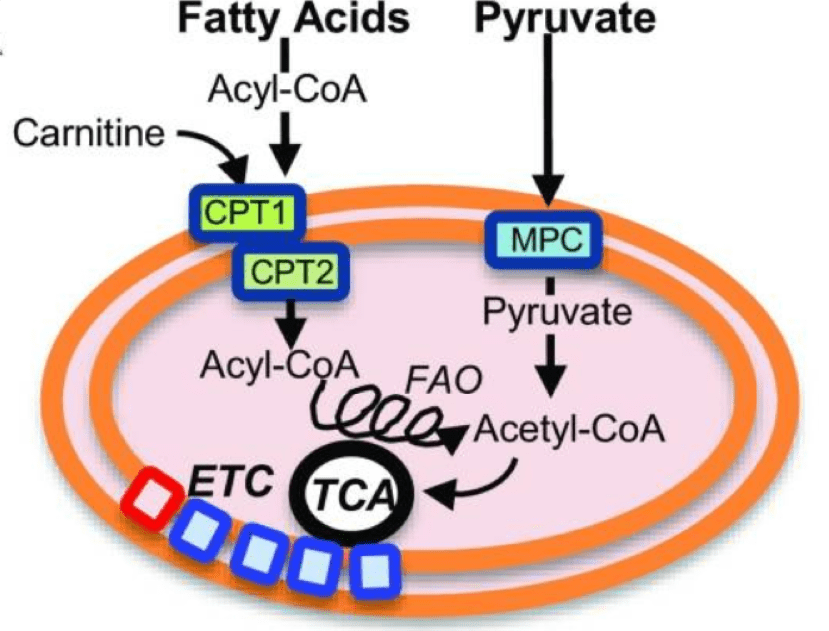

Diagram of a mitochondrion showing fatty acid and pyruvate transport. Fatty acids use CPT1/2 and carnitine to become Acyl-CoA, while pyruvate enters via MPC. Both produce Acetyl-CoA, feeding into the TCA cycle and ETC.

2018 Mitochondrial Metabolism Can Be Regulated By Smyd1

Drs. Franklin, Warren, and Zaitsev demonstrate mitochondrial metabolism can be regulated by Smyd1, an important modulator of gene expression in the heart. Warren J, Tracy CM, Miller MR, Makaju A, Szulik MW, Yuzyuk TN, Barton DW, Wang L, García J, Sabry AD, Cawley K, Cox J, Yong Hwan Han, Boudina S, Fiehn O, Tucker H, … Read more

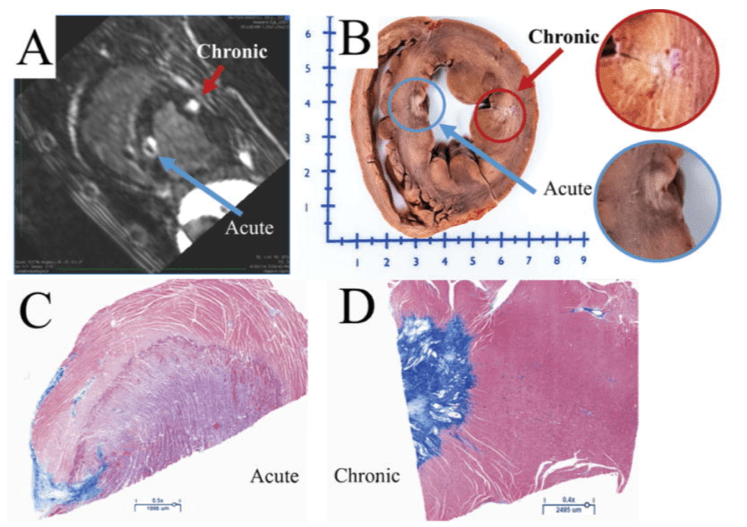
A: MRI and heart dissection highlight acute (blue) and chronic (red) damage. B: Close-ups of each region. C: Microscopic view of acute heart tissue. D: Microscopic view of chronic heart tissue. Blue stains indicate tissue changes.

2017 Predicting Edema and Chronic Lesion Size

Drs. Dosdall, MacLeod, and Ranjan demonstrate late gadolinium enhancement-MRI done acutely after myocardial ablation can quantify edema in the tissue and correlate the acute MRI findings with chronic lesion formation. Ghafoori E, Kholmovski EG, Thomas S, Silvernagel J, Angel N, Hu N, Dosdall D, MacLeod R, Ranjan R. Characterization of Gadolinium Contrast-Enhancement of Radiofrequency Ablation … Read more

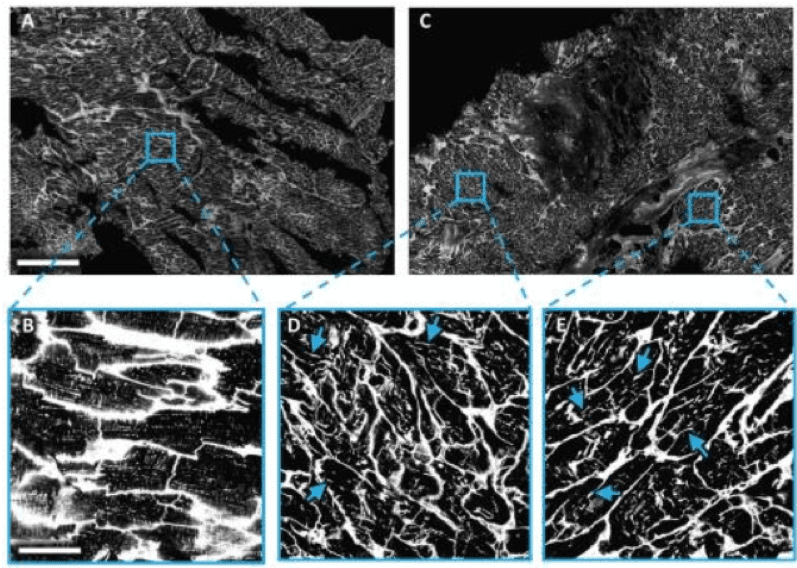
Black and white microscopic images show tissue structure comparisons. Enlarged insets highlight distinct morphological details, with blue boxes and arrows indicating areas of interest for closer examination.

2017 End-Stage Human Heart Failure Induces Development of Sheet-Like Invaginations of the Cell Membrane

Drs. Drakos, Sachse, Selzman, and Tristani-Firouzi demonstrate that end-stage human heart failure induces development of sheet-like invaginations of the cell membrane that may constitute a precondition and predictor for functional cardiac recovery after mechanical unloading. T. Seidel, S. Navankasattusas, A. Ahmad, N. A. Diakos, W. D. Xu, M. Tristani-Firouzi, M. J. Bonios, I. Taleb, D. … Read more

Diagram showing mechanisms of ion transport across a cell membrane (A) and graphs (B, C) comparing effects of extracellular and intracellular acidosis on various electrophysiological measurements, with control and acidosis conditions shown.

2011 First Intracellular and Extracellular pH on Calcium Handling in Heart Cells

The first comprehensive evaluation of selective actions of intracellular and extracellular pH on calcium handling in heart cells by Dr. Spitzer. Saegusa, N., Moorhouse, E., Vaughan-Jones, R.D., Spitzer KW. Influence of pH on Ca2+current and its control of electrical and Ca2+ signaling in ventricular myocytes. J Gen Physiol, 138(5), 537-559, 2011.

Two ECG tracings labeled a and b. Tracing a shows a regular rhythm, while tracing b displays an irregular, erratic pattern with varying distances between peaks.

2002 Dr. Tristani Identifies Several Novel Potassium Channel Mutations

Dr. Tristani identifies several novel potassium channel mutations that provide new insight concerning the mechanism of cardiac arrhythmia in patients with Anderson syndrome. Tristani-Firouzi M, Jensen JL, Donaldson MR, Sansone V, Meola G, Hahn A, Bendahhou S, Kwiecinski H, Fidzianska A, Plaster N, Fu YH, Ptacek LJ, Tawil R. Functional and clinical characterization of KCNJ2 … Read more