
Your genetic makeup has long been considered one of the few health factors you cannot change.. The DNA you inherit influences how your body functions and shapes your risk for conditions ranging from heart disease to certain cancers. For decades, genetics felt like destiny: an unalterable blueprint that set the boundaries of your health.
Genes affect how you process cholesterol, regulate cell growth, repair damaged tissue, and respond to environmental stress. In many cases, inherited mutations can quietly increase risk long before symptoms appear.
In recent years, scientists have developed technologies that do more than simply identify genetic risk,they can intervene at the source. Gene therapy, a field focused on modifying or replacing faulty genes, represents one of the most significant advances in modern medicine. Instead of only managing symptoms, gene therapy seeks to correct the underlying genetic cause of disease.
For the first time, the idea that genetics is fixed is being challenged by tools designed to rewrite parts of the code itself.
From Discovery to Treatment
Over the last several decades, researchers have identified genes responsible for many diseases and conditions. These serve as promising treatment targets. However, identifying a gene linked to disease is only the first step. The greater challenge lies in determining how to safely and effectively translate that discovery into a treatment.
Sometimes a gene contains a harmful change in its DNA, known asa genetic mutation. These changes can cause disease or increase the risk of developing one, which is why they are often targeted in gene therapy. However, genes are immensely complex. A single gene can influence multiple biological processes. For example, a gene that puts you at risk for heart disease may also play an important protective role elsewhere inyour body. Because genes rarely control only one function, and because many diseases involve multiple genes, determining the best target for intervention can be complicated.
Before scientists can consider a gene as a viable target for treatment, they must understand its full range of functions. With that knowledge, they can begin developing targeted therapies.
The Mechanics of Gene Therapy
Gene therapy is a way of treating disease by changing how genes behave inside the body. Depending on the condition, scientists may try to replace a missing or broken gene with a healthy one, silence or “turn off” a harmful gene that is overactive, or introduce new genetic instructions tohelp cells function normally.
To do this, researchers need a delivery system, because genes cannot simply be swallowed like a pill. Most gene therapies use modified viruses as carriers. These viruses are engineered so they cannot cause illness, but they can deliver new genetic material into a patient’s cells. Other approaches use tiny lipid (fat-based) particles, similar to the delivery method used in some mRNA vaccines.
Once the new genetic instructions reach the correct cells, they can begin producing a needed protein, correcting a defect, or changing the cell’s behavior. Some therapies are designed to work long-term after a single treatment, while others may need repeat dosing depending on how long the effect lasts and which cells are targeted.
The Main Approaches to Gene Therapy
Once scientists understand a gene well enough to target it safely, they can begin exploring different ways to intervene. Gene therapy is not one single technique, but a set of approaches designed to correct, replace, or modify genetic instructions.
One approach involves inserting a new gene directly into the body. Another method, known as ex vivo gene therapy, (Latin for “outside the body”), removes cells from the body, modifies them in a laboratory setting, and implants the corrected cellsback into the body.
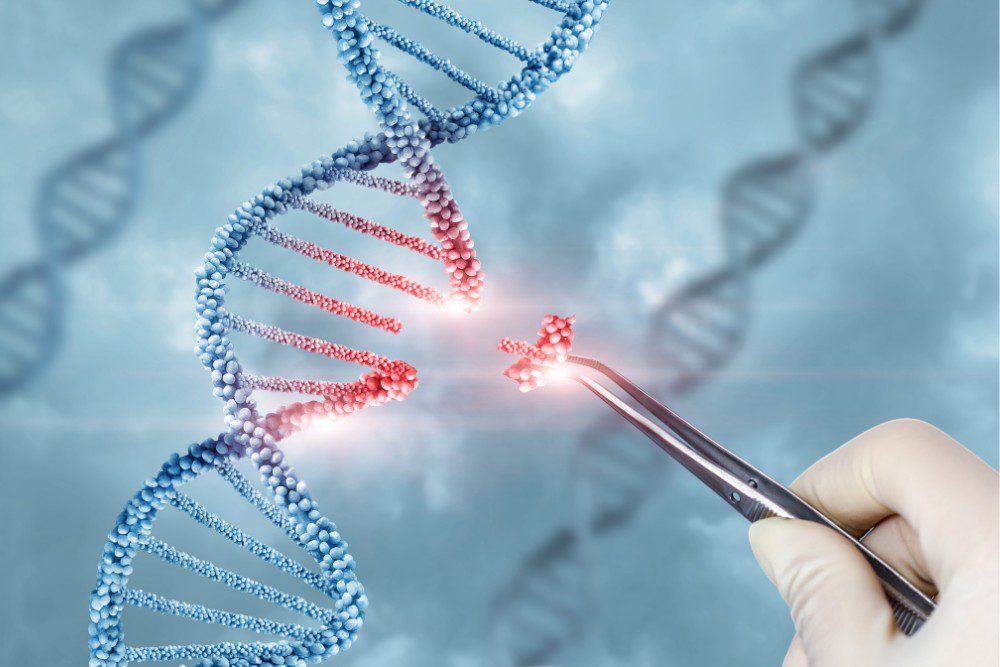
Another gene therapy that has received widespread attention CRISPR. At its most basic level, this is like a microscopic set of scissors that can precisely cut DNA at a specific locationto paste in a new gene. CRISPR,short for clustered regularly interspaced short palindromic repeats, was discovered in bacteria as a way to defend againstviruses.
CRISPR has been used to treat blood conditions such as sickle cell disease and applications in agriculture to improve crop resilience and yields. While this precision tool holds enormous promise, continued research is necessary to ensure it can be safely and effectively applied to a wider range of human diseases.
Treating PreviouslyIncurable Diseases by Targeting Genes
Gene therapy is seen as a beacon of hope for many people living with conditions that have few or no drug treatment options. Drugs can be used to target the effects of genes and body systems, but identifying drug candidates and evaluating their effectiveness can be time-consuming. By targeting disease at its source, it is hoped that medical discoveries can be achieved more quickly and efficiently.
Heart disease researchers are actively exploring gene therapy in clinical trials. These controlled studies evaluate both safety and effectiveness.. Current investigations include therapies for inherited high cholesterol disorders, certain forms of heart muscle disease and heart failure caused byamyloid protein deposits.
Another type of gene therapy being studied in certain cancers is CAR T-cell therapy. This approach modifies the body’s own T-cells, a type of white blood cell central to immune defense, to better recognize and attack cancer cells.
In CAR T therapy, T cells are harvested from your blood and then modified in a lab to add a receptor that helps guide them to the proper target. These CAR T cells are then returned to your blood where they can seek out and destroy targeted cancer cells.
Current and Future Gene Therapy Options
While the number of gene therapy options approved by the U.S. Food and Drug Administration (FDA) remains limited, the field is rapidly expanding. Approved treatments now exist for conditions including sickle cell disease, Duchenne muscular dystrophy, leukemia, certain inherited retinal disorders and the blood disorder hemophilia A.
The FDA has approved several dozen cell and gene therapies, and experts hope up to 50 more could gain approval by the end of the decade. Experts are also hopeful that the FDA will continue to make changes that could be used to fast track approvals for certain promising gene therapy treatments.
Gene therapy is reshaping how we think about disease. What was once considered an unchangeable genetic blueprint is now increasingly viewed as modifiable biology. As research advances, gene-based treatments may shift medicine from managing disease to correcting it at its core.
Visit the Nora Eccles Harrison Cardiovascular Research and Training Institute (CVRTI) website to keep up with advances in heart research and gene therapy updates related to cardiovascular health.